
Best Things to Do in the French Quarter After Seeing the Tall Ships
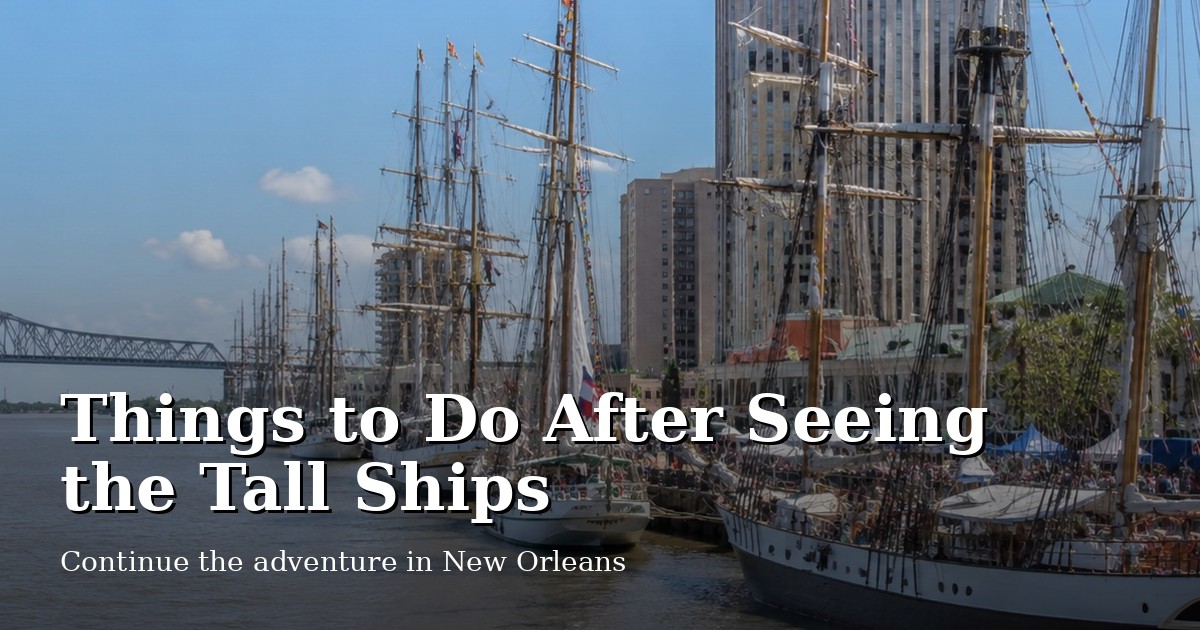
The towering masts, billowing sails, and weathered wooden decks of the Tall Ships offer a glimpse into a world that once connected New Orleans to the Caribbean, Europe, and ports across the Gulf Coast.
But after you’ve admired the ships themselves, many visitors find themselves asking a different question:
Who were the men who sailed vessels like these?
Some were merchants. Some were naval officers. Some were privateers operating with government permission. Others were smugglers and pirates who built fortunes in the shadows of empires.
Few American cities are more connected to that world than New Orleans.
If you’ve finished exploring the Tall Ships and want to continue the adventure, here are some of the best things to do nearby.
1. Follow the Stories of Pirates, Privateers, and Smugglers
Seeing the ships is only half the story.
The real drama happened ashore—in taverns, warehouses, gambling halls, and hidden courtyards where fortunes were won and lost.
New Orleans was once home to sailors, merchants, privateers, and the infamous Jean Lafitte, whose smuggling network operated along the Louisiana coast during the early 1800s. His men sailed vessels throughout the Gulf of Mexico, moving goods, intelligence, and occasionally themselves beyond the reach of customs officials.
A guided pirate walking tour helps connect the ships on the Mississippi River to the people who once sailed them. Visitors explore the French Quarter while hearing the true stories of Lafitte, the Baratarians, privateering, smuggling operations, and the events that eventually led to the Battle of New Orleans.
For anyone fascinated by the Tall Ships, it is one of the most natural ways to continue exploring the maritime history of the city.
2. Explore Historic Pirates Alley
Just steps from Jackson Square sits Pirates Alley, one of the most photographed and historic passageways in the French Quarter.
The narrow brick alley feels like a doorway into another century. Surrounded by historic buildings and tucked beside St. Louis Cathedral, it offers visitors a quieter side of the Quarter away from the crowds of Bourbon Street.
It’s also the perfect place to imagine the New Orleans that sailors, merchants, soldiers, and smugglers would have known more than two hundred years ago.
While exploring the alley, stop by the Pirates of the Quarter Shop, a pirate-themed store filled with New Orleans-inspired souvenirs, pirate apparel, historical gifts, books, maps, and unique treasures you won’t find in typical souvenir shops. Whether you’re looking for a pirate shirt, a keepsake from your trip, or simply want to browse a shop dedicated to the city’s maritime history, it’s a fun stop for visitors of all ages.
Many visitors begin their pirate adventure with a walking tour and return afterward to browse the shop’s collection of pirate-themed merchandise and local historical gifts.
Afterward, take a few minutes to enjoy the atmosphere of the alley itself. The shade, brick pathways, and historic surroundings make it one of the most charming hidden corners of the French Quarter.
3. Visit Jackson Square
Few places capture the spirit of New Orleans better than Jackson Square.
Originally known as the Place d’Armes, the square has served as the center of city life since the colonial era. Today visitors can enjoy local artists, musicians, street performers, and some of the most recognizable architecture in Louisiana.
From the square you’ll enjoy views of St. Louis Cathedral, the The Cabildo, and the Presbytère—buildings that witnessed many of the same historical events connected to the age of sail.
4. Visit the Cabildo
If the history of the Tall Ships sparked your curiosity, the The Cabildo should be near the top of your list.
Located beside St. Louis Cathedral, this museum explores colonial Louisiana, the Louisiana Purchase, maritime trade, and the Battle of New Orleans.
Its exhibits help place New Orleans within the larger Atlantic world that made tall ships essential to commerce, exploration, and warfare.
5. Browse the French Market
For centuries merchants have gathered near this stretch of the riverfront to buy, sell, and trade goods arriving by ship.
Today the French Market offers local crafts, artwork, gifts, food vendors, and souvenirs. While modern in many ways, it still reflects New Orleans’ long history as a trading city connected to the rest of the world through its port.
6. Walk Along the Mississippi River
After seeing the Tall Ships up close, take time to enjoy the river itself.
The Mississippi remains one of the busiest waterways in North America, and watching modern cargo vessels navigate the same channel once used by sailing ships provides a fascinating contrast between past and present.
Along the riverfront you’ll find excellent views, public art, and plenty of opportunities for photographs.
7. Enjoy Beignets and Coffee
No day in the French Quarter is complete without a stop for beignets and café au lait.
The famous Café du Monde has welcomed travelers, sailors, merchants, and visitors for generations. Grab a seat, enjoy the people-watching, and prepare for a generous coating of powdered sugar.
8. Experience Live Music After Dark
As evening arrives, the French Quarter and nearby Frenchmen Street come alive with music.
Jazz, blues, brass bands, and local performers create the soundtrack of modern New Orleans, offering visitors a completely different side of the city than the one they experienced aboard the Tall Ships earlier in the day.
Continue the Adventure Beyond the Harbor
The Tall Ships offer a rare chance to step into the maritime world of centuries past. Yet some of the most fascinating stories connected to those vessels are found not on the water, but in the streets of New Orleans itself.
From Pirates Alley and Jackson Square to the legends of Jean Lafitte and the Battle of New Orleans, the French Quarter remains filled with reminders of the sailors, smugglers, merchants, and adventurers who helped shape the city.
After you’ve seen the ships, take the next step and discover the people who sailed them.