
Why New Orleans Is Unlike Any Other City in America
There are beautiful cities.
There are historic cities.
There are cities with incredible food, world-class music, and unforgettable festivals.
Then there’s New Orleans.
No other city in America blends European traditions, Caribbean influences, African heritage, and Southern hospitality into a culture so distinct that it feels like stepping into another world. Here, history isn’t confined to museums. It lives in the streets, echoes from wrought-iron balconies, drifts through open doorways with the sound of jazz, and lingers in every meal shared around a crowded table.
Whether you’re visiting for a weekend or planning the trip of a lifetime, you’ll quickly discover that New Orleans isn’t just another destination—it’s an experience.
A City Built by Many Cultures
Founded in 1718 by the French, New Orleans has spent more than three centuries evolving into one of the world’s most fascinating cities.
The French established it. The Spanish rebuilt much of it after devastating fires. African traditions shaped its music and cuisine. Caribbean influences added new flavors and customs. Generations of immigrants from Ireland, Germany, Italy, and countless other countries left their mark as well.
Unlike many American cities that feel carefully planned, New Orleans grew organically. Every neighborhood tells a different story, and nowhere is that more evident than the French Quarter.
The French Quarter: The Soul of New Orleans
When people picture New Orleans, they usually imagine the French Quarter.
Yes, Bourbon Street is famous. But the real magic lies beyond the neon lights.
Walk a few blocks and you’ll find quiet courtyards hidden behind centuries-old buildings, narrow brick alleyways lit by gas lamps, colorful balconies overflowing with plants, and musicians performing on street corners simply because they love to play.
This is one of the most walkable historic districts in America. Every block reveals another piece of history waiting to be discovered.
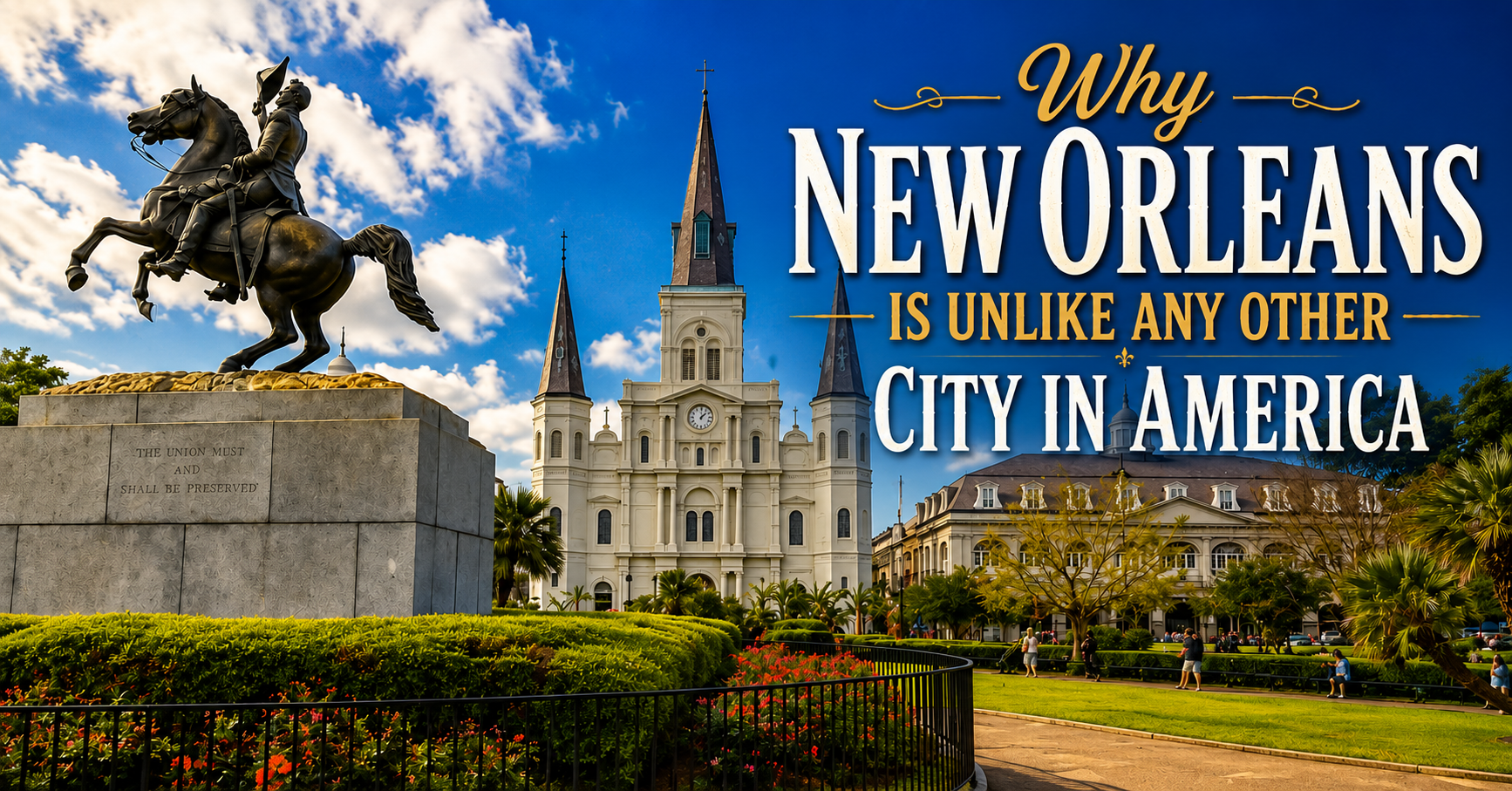
Stand in Jackson Square and imagine the city under French rule. Wander through Pirates Alley and picture merchants, sailors, soldiers, and pirates passing beneath the same buildings that still stand today. Explore Royal Street’s galleries or linger outside St. Louis Cathedral as artists display their work beneath ancient oak trees.
The French Quarter isn’t something you rush through.
It’s something you experience.
Food Is More Than a Meal
In New Orleans, food is part of the city’s identity.
Recipes passed down through generations continue to define family gatherings and neighborhood restaurants. You’ll find influences from France, Spain, West Africa, Italy, the Caribbean, and Louisiana’s own unique traditions woven into nearly every dish.
Visitors quickly learn that deciding where to eat can be one of the hardest parts of planning a trip.
Should you start your morning with warm beignets and café au lait?
Order a bowl of rich seafood gumbo for lunch?
Try jambalaya, red beans and rice, crawfish étouffée, charbroiled oysters, or a classic muffuletta?
Ask ten locals where to find the best po’boy, and you’ll probably get ten different answers.
That’s part of the fun.
Food isn’t simply fuel here. It’s conversation, celebration, and tradition.
Music Isn’t an Attraction—It’s Everyday Life
Many cities have concert venues.
New Orleans has music around every corner.
Jazz was born here, but it’s only the beginning. Brass bands, blues, funk, gospel, zydeco, Cajun music, and modern artists all contribute to the soundtrack of the city.
Walk down Frenchmen Street in the evening, and you’ll hear bands performing in clubs, on patios, and sometimes right on the sidewalk.
Visit Jackson Square during the day, and you’ll likely find street musicians entertaining visitors beneath the cathedral.
Even weddings become celebrations as second lines wind through the streets with brass bands leading the way.
Music isn’t scheduled.
It’s simply part of life.
There’s Always Something to Celebrate
Of course, everyone knows Mardi Gras.
But many first-time visitors are surprised to learn that New Orleans celebrates nearly every month of the year.
From the French Quarter Festival and the New Orleans Jazz & Heritage Festival to Satchmo SummerFest, Essence Festival, Tales of the Cocktail, and countless neighborhood events, there’s always another reason for people to gather.
Some festivals attract hundreds of thousands of visitors.
Others are small community celebrations where you’ll feel like a local.
No matter when you visit, chances are something special is happening.
Nature Is Closer Than You Think
Many travelers are surprised by how much natural beauty surrounds New Orleans.
The mighty Mississippi River flows beside the French Quarter, shaping the city’s history and economy for centuries.
Just beyond the city, you’ll find peaceful bayous, winding waterways, cypress swamps, and abundant wildlife. Fishing enthusiasts come from around the country to experience some of the best inshore and offshore fishing Louisiana has to offer.
Kayaking through quiet marshes, watching birds soar overhead, spotting alligators in their natural habitat, or simply enjoying a sunset along the river reminds visitors that New Orleans is deeply connected to the water.
The city and the outdoors exist side by side.
The Stories That Really Happened
History lovers quickly discover that New Orleans has no shortage of remarkable stories.
Pirates sailed these waters.
Smugglers built fortunes in the nearby Barataria Bay.
Military leaders defended the city during the Battle of New Orleans.
Merchants, immigrants, free people of color, and entrepreneurs all helped shape its future.
One of the most fascinating figures remains Jean Lafitte.
Depending on who you ask, he was a pirate, privateer, smuggler, businessman, patriot—or perhaps a little of each.
More than two centuries later, historians still debate his legacy.
That’s what makes New Orleans so compelling.
The city’s greatest stories aren’t legends because someone invented them.
They’re unforgettable because they really happened.
One of the best ways to appreciate that history is by walking the streets where it unfolded. Seeing the places where these events occurred transforms names in a history book into real people who helped shape one of America’s most remarkable cities.
The People Make the Difference
Ask visitors what they remember most about New Orleans, and many won’t mention a specific attraction.
They’ll talk about the people.
The bartender who recommended a neighborhood restaurant.
The musician who chatted between songs.
The artist explaining a painting in Jackson Square.
The server who convinced them to try something they’d never eaten before.
New Orleans has a way of making strangers feel welcome.
The city encourages conversation.
People aren’t in a hurry.
They’ll tell you where to eat, what to see, and often share a story before you leave.
Slow Down and Wander
Many vacations become a race to check attractions off a list.
New Orleans rewards a different approach.
Spend an afternoon sitting in Jackson Square.
Watch artists create their work.
Listen to a trumpet echo through the streets.
Step into a neighborhood café.
Explore side streets without worrying about where they lead.
Some of the city’s best memories aren’t planned.
They’re discovered.
Experience New Orleans Through Its History
If you’re visiting New Orleans for the first time, don’t just see the city—learn its stories.
The French Quarter becomes even more meaningful when you understand who walked these streets centuries ago. The buildings, courtyards, and alleyways reveal a deeper story once you know the people behind them.
At Pirates of the Quarter, our guided walking tours focus on the real history of New Orleans’ pirates, privateers, and colorful characters. Rather than myths or folklore, we share the documented stories of Jean Lafitte, the Baratarians, and the events that helped shape the city you see today.
It’s one of the most enjoyable ways to experience the French Quarter—and you’ll never look at these historic streets the same way again.
Why New Orleans Is So Special
New Orleans cannot be reduced to a single attraction.
It’s the aroma of fresh beignets in the morning.
The sound of a trumpet drifting through the evening air.
A meal you’ll still be talking about months later.
A centuries-old street where history feels remarkably close.
It’s a city that embraces its past while celebrating every single day.
Whether you come for the architecture, the music, the incredible food, the festivals, the fishing, or the fascinating history, one thing is almost certain:
You’ll leave planning your next visit before you’ve even gone home.
Frequently Asked Questions
Why is New Orleans so unique?
New Orleans is unlike any other American city because it blends French, Spanish, African, Caribbean, and Southern influences into a culture all its own. From the historic French Quarter and world-famous cuisine to live music, festivals, and centuries of history, every visit offers an experience you won’t find anywhere else.
What is New Orleans most famous for?
New Orleans is best known for the French Quarter, Mardi Gras, jazz music, Creole and Cajun cuisine, historic architecture, the Mississippi River, and its rich cultural heritage. Visitors also come to experience iconic landmarks like Jackson Square and St. Louis Cathedral.
What is the best time of year to visit New Orleans?
New Orleans is a year-round destination, but spring (February through May) and fall (October through November) offer pleasant weather and numerous festivals. Winter is ideal for those visiting during Mardi Gras, while summer often features fewer crowds and attractive hotel rates.
Is the French Quarter worth visiting?
Absolutely. The French Quarter is the oldest neighborhood in New Orleans and is home to historic landmarks, beautiful architecture, live music, art galleries, restaurants, and hidden courtyards. Walking through its streets is one of the best ways to experience the city’s unique character.
How many days should I spend in New Orleans?
Most first-time visitors should plan to spend at least three to four days in New Orleans. This allows enough time to explore the French Quarter, enjoy local restaurants, experience live music, visit museums, take a historic walking tour, and explore areas beyond downtown.
Is New Orleans a good destination for families?
Yes. While Bourbon Street is known for its nightlife, New Orleans offers plenty of family-friendly attractions, including historic walking tours, riverboat cruises, museums, the Audubon Zoo and Aquarium, City Park, and delicious local food that appeals to all ages.
What foods should I try in New Orleans?
No visit is complete without sampling New Orleans classics like gumbo, jambalaya, beignets, crawfish étouffée, po’boys, muffulettas, charbroiled oysters, and red beans and rice. Every neighborhood has its own favorite restaurants, making dining one of the highlights of any trip.
What is the best way to experience the history of New Orleans?
Walking through the French Quarter with a knowledgeable local guide is one of the best ways to understand the city’s fascinating history. Seeing the places where important events happened brings New Orleans’ rich past to life in a way that guidebooks simply can’t.
Who was Jean Lafitte?
Jean Lafitte was one of the most famous figures in New Orleans history. Known as a pirate, privateer, smuggler, and businessman, he played an important role during the Battle of New Orleans in 1815. His legacy remains one of the city’s most debated and fascinating historical stories.
What are some unique things to do in New Orleans?
Beyond the famous attractions, visitors can explore Pirates Alley, stroll Royal Street, enjoy live music on Frenchmen Street, take a Mississippi River cruise, visit historic cemeteries, explore nearby bayous, and join a guided pirate history walking tour to discover the city’s lesser-known stories.
What is the best walking tour in New Orleans?
The best walking tour depends on your interests. If you’re fascinated by the city’s authentic history, a pirate history walking tour offers a unique perspective on Jean Lafitte, the Baratarians, and the events that helped shape New Orleans. Walking the French Quarter with a knowledgeable guide allows you to experience the streets, architecture, and stories in a way that’s impossible from a bus or guidebook.